🕉️🎶 Análisis del Video: Harinama en Phu Quoc, Vietnam — Comparación con el Vedabase
Lo que muestra el video
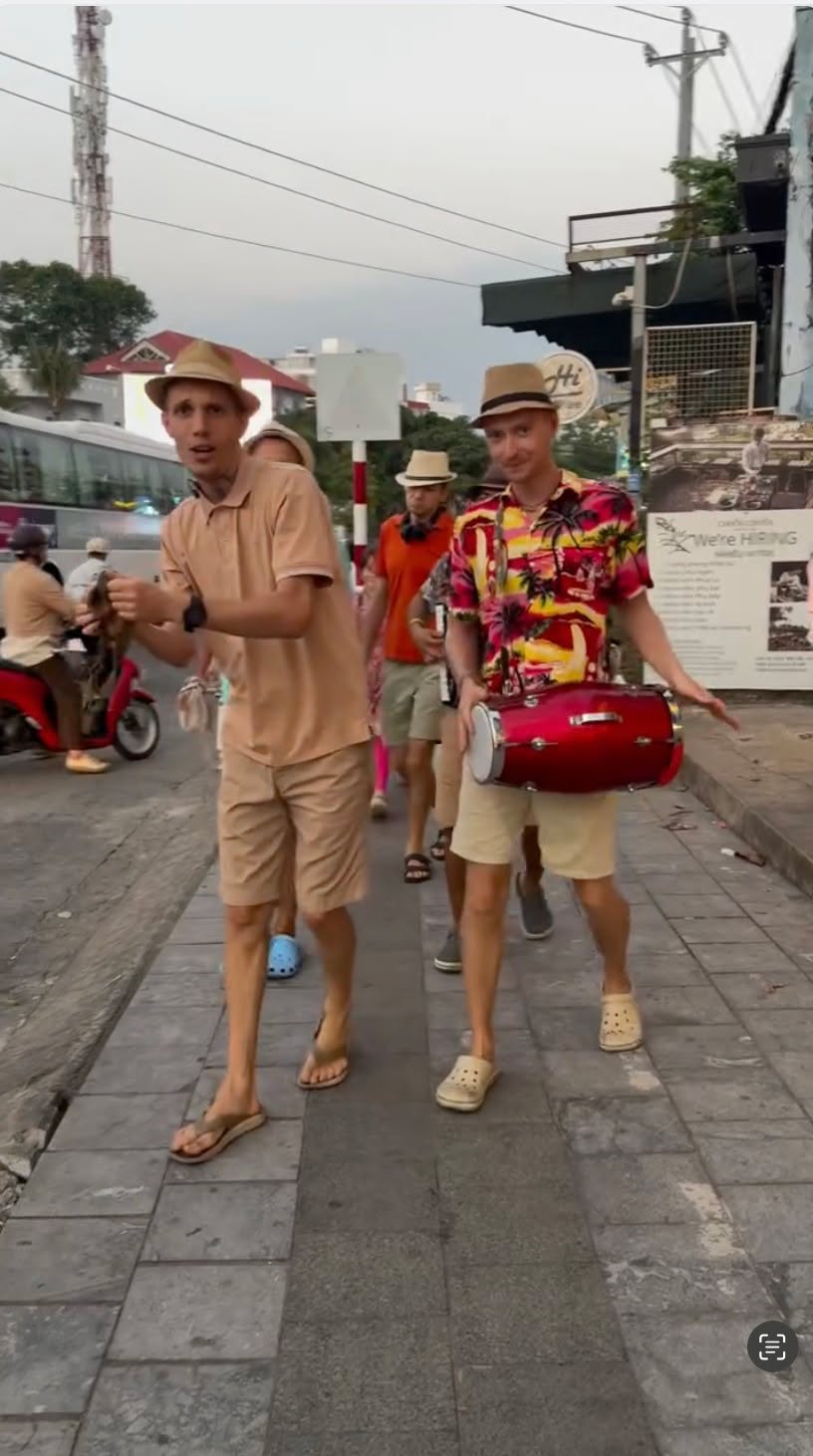
Un grupo de devotos haciendo harinama sankirtana por las calles turísticas de Phu Quoc, Vietnam, pasando por hoteles (Monaco Hotel), tiendas, bares. Van vestidos completamente de civil — polos, shorts, camisas hawaianas, sombreros de paja, crocs, sandalias. Un devoto toca un acordeón. No se ve tilak, ni sikha, ni kanthi-mala, ni ropa vaishnava de ningún tipo.
Puntos problemáticos
1. Ausencia total de tilak
Prabhupada corregía personalmente a devotos sin tilak:
"Where is your tilaka? No tilaka." (Lectures 1, línea 96295)
"...you have no tilaka." (Lectures 1, línea 97701)
Y estableció que los signos vaishnavas son el requisito mínimo:
"According to sastra anyone who wears tilaka and sikha and kunti over and above the Vaisnava dress or Vaisnava sannyasi must be accepted especially while chanting Hare Krishna mantra with bead bags." (Carta a Syamasundara, 8 abril 1974)
Es decir: tilak + sikha + kanthi-mala son la identidad mínima de un vaishnava. Este grupo no muestra ninguno de estos elementos.
2. Vestimenta civil vs. estándar vaishnava
Prabhupada sí permitió ropa civil en ciertos contextos:
"Outside the Temple they may wear American gentleman's dress, with Tilaka, flag, and beads. It is not required to wear dhotis, as this society does not understand." (Carta a Balai, 12 marzo 1968)
"Let us sell Bhagavad-gita only in plain dress, we don't require saffron dress." (Carta a Gurukrpa, 14 diciembre 1976)
Pero incluso cuando permitía ropa civil, siempre requería tilak, coleta y cuentas (kanthi-mala). Nunca aprobó presentarse sin ningún signo vaishnava. La carta a Gurukrpa era para distribución de libros en Japón, no para harinama.
3. Acordeón en lugar de mridanga y karatalas
El Caitanya Caritamrta establece el estándar claro del sankirtana:
"This is a scheme for performing kīrtana in a procession. During Śrī Caitanya Mahāprabhu's time, one party was composed of twenty-one men: four people playing mṛdaṅgas, one leading the chanting, and sixteen others striking karatālas, responding to the leading chanter." (CC, línea 81785)
"mṛdaṅga-karatāla saṅkīrtana-mahādhvani — mṛdaṅga drum; karatāla hand bells; saṅkīrtana chanting of the holy name of the Lord; mahā-dhvani great vibration" (CC, línea 81323)
Prabhupada importaba personalmente mridangas, karatalas y harmoniums desde India para sus centros. En el video no se ve ningún instrumento tradicional — solo un acordeón.
4. Aspecto positivo: predicar sin discriminación
El Caitanya Caritamrta sí apoya ir a predicar a todas partes:
"This is the sum and substance of Lord Caitanya's saṅkīrtana movement. There is no distinction made between those who are fit and those who are not fit to hear or take part in the saṅkīrtana movement. It should therefore be preached without discrimination." (CC, línea 50127)
"Lord Śrī Caitanya Mahāprabhu is the father and inaugurator of the saṅkīrtana movement. One who worships Him by sacrificing his life, money, intelligence and words for the saṅkīrtana movement is recognized by the Lord and endowed with His blessings." (CC, línea 12739)
Resumen: Balance
• Cantar en la calle → Aprobado — Caitanya Mahaprabhu lo inauguró
• Ir a zonas turísticas → Aprobado — sin discriminación de lugar ni audiencia
• Sin tilak → Problemático — Prabhupada lo exigía siempre
• Sin sikha ni kanthi-mala → Problemático — identidad vaishnava mínima
• Ropa totalmente civil → Parcialmente aceptable — Prabhupada lo permitió PERO siempre con tilak y cuentas
• Acordeón en vez de mridanga → Sin precedente — el estándar es mridanga + karatalas
• Grupo mixto casual → Ambiguo — depende del contexto cultural
La conclusión es que el acto de cantar es positivo y conforme, pero la presentación se aparta significativamente del estándar establecido por Prabhupada. Incluso cuando autorizaba ropa civil, mantenía los signos vaishnavas como no negociables.
Lo que muestra el video
Un grupo de devotos haciendo harinama sankirtana por las calles turísticas de Phu Quoc, Vietnam, pasando por hoteles (Monaco Hotel), tiendas, bares. Van vestidos completamente de civil — polos, shorts, camisas hawaianas, sombreros de paja, crocs, sandalias. Un devoto toca un acordeón. No se ve tilak, ni sikha, ni kanthi-mala, ni ropa vaishnava de ningún tipo.
Puntos problemáticos
1. Ausencia total de tilak
Prabhupada corregía personalmente a devotos sin tilak:
"Where is your tilaka? No tilaka." (Lectures 1, línea 96295)
"...you have no tilaka." (Lectures 1, línea 97701)
Y estableció que los signos vaishnavas son el requisito mínimo:
"According to sastra anyone who wears tilaka and sikha and kunti over and above the Vaisnava dress or Vaisnava sannyasi must be accepted especially while chanting Hare Krishna mantra with bead bags." (Carta a Syamasundara, 8 abril 1974)
Es decir: tilak + sikha + kanthi-mala son la identidad mínima de un vaishnava. Este grupo no muestra ninguno de estos elementos.
2. Vestimenta civil vs. estándar vaishnava
Prabhupada sí permitió ropa civil en ciertos contextos:
"Outside the Temple they may wear American gentleman's dress, with Tilaka, flag, and beads. It is not required to wear dhotis, as this society does not understand." (Carta a Balai, 12 marzo 1968)
"Let us sell Bhagavad-gita only in plain dress, we don't require saffron dress." (Carta a Gurukrpa, 14 diciembre 1976)
Pero incluso cuando permitía ropa civil, siempre requería tilak, coleta y cuentas (kanthi-mala). Nunca aprobó presentarse sin ningún signo vaishnava. La carta a Gurukrpa era para distribución de libros en Japón, no para harinama.
3. Acordeón en lugar de mridanga y karatalas
El Caitanya Caritamrta establece el estándar claro del sankirtana:
"This is a scheme for performing kīrtana in a procession. During Śrī Caitanya Mahāprabhu's time, one party was composed of twenty-one men: four people playing mṛdaṅgas, one leading the chanting, and sixteen others striking karatālas, responding to the leading chanter." (CC, línea 81785)
"mṛdaṅga-karatāla saṅkīrtana-mahādhvani — mṛdaṅga drum; karatāla hand bells; saṅkīrtana chanting of the holy name of the Lord; mahā-dhvani great vibration" (CC, línea 81323)
Prabhupada importaba personalmente mridangas, karatalas y harmoniums desde India para sus centros. En el video no se ve ningún instrumento tradicional — solo un acordeón.
4. Aspecto positivo: predicar sin discriminación
El Caitanya Caritamrta sí apoya ir a predicar a todas partes:
"This is the sum and substance of Lord Caitanya's saṅkīrtana movement. There is no distinction made between those who are fit and those who are not fit to hear or take part in the saṅkīrtana movement. It should therefore be preached without discrimination." (CC, línea 50127)
"Lord Śrī Caitanya Mahāprabhu is the father and inaugurator of the saṅkīrtana movement. One who worships Him by sacrificing his life, money, intelligence and words for the saṅkīrtana movement is recognized by the Lord and endowed with His blessings." (CC, línea 12739)
Resumen: Balance
• Cantar en la calle → Aprobado — Caitanya Mahaprabhu lo inauguró
• Ir a zonas turísticas → Aprobado — sin discriminación de lugar ni audiencia
• Sin tilak → Problemático — Prabhupada lo exigía siempre
• Sin sikha ni kanthi-mala → Problemático — identidad vaishnava mínima
• Ropa totalmente civil → Parcialmente aceptable — Prabhupada lo permitió PERO siempre con tilak y cuentas
• Acordeón en vez de mridanga → Sin precedente — el estándar es mridanga + karatalas
• Grupo mixto casual → Ambiguo — depende del contexto cultural
La conclusión es que el acto de cantar es positivo y conforme, pero la presentación se aparta significativamente del estándar establecido por Prabhupada. Incluso cuando autorizaba ropa civil, mantenía los signos vaishnavas como no negociables.